

What a TMS Session Looks Like From Start to Finish
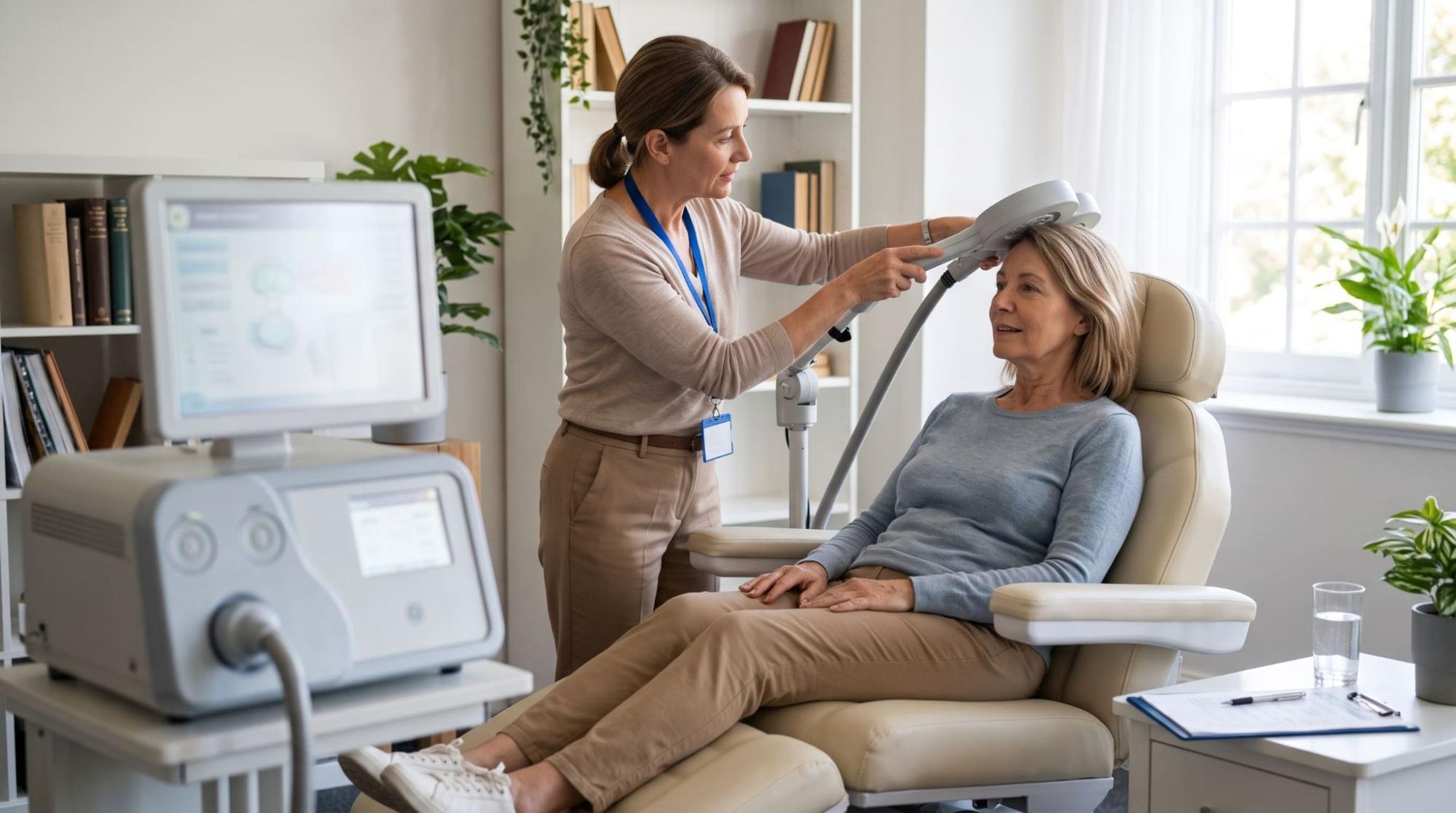
A TMS session is a non-invasive, outpatient procedure in which you recline comfortably, stay fully awake, and receive gentle magnetic stimulation in a visit that lasts approximately 30 minutes. Your very first appointment runs longer than a standard session because it includes a mapping step that locates the exact treatment spot on your head. There is no anesthesia, no downtime, and nothing to recover from; you can drive yourself home or head straight back to work. Below, we walk through the entire experience from your first consultation to your final session, so nothing about the process surprises you.
Key Takeaways
- Transcranial magnetic stimulation (TMS) is an FDA-cleared, non-invasive treatment that uses targeted magnetic pulses to stimulate the brain areas involved in mood regulation.
- Your first visit includes a brain mapping step to find the precise treatment location and the right pulse strength for you, and that spot is recorded for every session after.
- Regular sessions last approximately 30 minutes, feel like a gentle tapping on the scalp, and let you relax, listen to music, or rest your eyes the entire time.
- You can return to driving, work, and all normal activities immediately after every session, with no recovery period.
- A full course runs weekday sessions over several weeks, totaling 36 treatments, and early signs of progress often show up in sleep and energy before mood.
What Is a TMS Session?
A TMS session is a short outpatient treatment in which a specialized magnetic coil rests against your scalp and delivers brief magnetic pulses, similar in strength to those used in an MRI machine, to stimulate the prefrontal cortex. That region of the brain shows decreased activity in people with depression, and repeated stimulation helps reactivate it. TMS is FDA-cleared, requires no anesthesia or sedation, and works directly on the neural circuits involved in mood rather than circulating through your whole body the way medication does.
Because nothing enters your bloodstream, there is nothing to sleep off and nothing that lingers after you leave. People often schedule TMS therapy around work, school pickup, or lunch breaks; most insurance plans cover the treatment, and that convenience is a real part of why it fits into ordinary life so well. The need for options like this is enormous: according to the National Institute of Mental Health, an estimated 21 million U.S. adults experienced at least one major depressive episode in 2021, and a meaningful share of them do not get adequate relief from medication alone.
What Happens Before Your First Session?
Before your first session, you complete a consultation and a brain mapping appointment, and both exist to make every later visit precise and uneventful.
The Consultation
The process starts with a conversation, not a machine. A psychiatric provider reviews your symptoms, treatment history, current medications, and overall health to confirm TMS fits your situation. This visit builds on the same foundation as a psychiatric evaluation: your history tells the story, and the treatment plan follows from it. The team also screens for the small number of safety exclusions, such as non-removable metal implants in or near the head, and answers every question you bring.
Brain Mapping on Your First Visit
Your first treatment visit includes a mapping step, which is why it runs longer than a standard session. The provider positions the magnetic coil against your head and delivers single pulses while watching for a small, involuntary twitch in your hand or fingers. That response identifies your motor threshold, which sets the exact pulse strength your TMS treatment needs, and it pinpoints the precise location on your scalp where the coil belongs. Both are recorded so that every following session starts exactly where it should, quickly and consistently.
What Happens During a TMS Session?
During a TMS session, you sit back in a comfortable reclining chair, fully awake and alert, while the coil delivers rhythmic magnetic pulses to your pre-measured treatment spot. A typical session moves through the same simple sequence every time:
- Check in and settle into the treatment chair; daily visits quickly start to feel routine.
- Remove glasses, jewelry, and anything metal, and put in the earplugs provided, since the machine produces a clicking sound during pulses.
- The technician positions the coil against the mapped spot on your scalp.
- The device delivers its pulse cycles, which most people describe as a gentle tapping sensation on the scalp, accompanied by clicking sounds similar to a metronome.
- Relax for the duration; you can rest your eyes, listen to music, or simply sit quietly through the session, which lasts approximately 30 minutes.
Some people notice brief tingling or a light twitching in the scalp, jaw, or face during pulse cycles, which reflects nearby nerves responding and settles between cycles. The sensation takes a session or two to get used to, and most people find it entirely tolerable once it becomes familiar. If anything feels uncomfortable, say so; small adjustments to the coil position often resolve discomfort without reducing the treatment’s effect.
What Happens After Each Session?
After each session, you return immediately to your normal day, with no anesthesia to wear off and no recovery period. You can drive yourself, go back to work or class, exercise, and make decisions exactly as you would on any other day.
The most common side effect is mild discomfort or tenderness at the treatment site, sometimes with a brief headache. Cleveland Clinic notes that TMS side effects are generally mild and typically improve after the first week or two of treatment, and that headache, the most common one, usually responds to over-the-counter pain relievers your provider approves. Serious effects are rare: the risk of seizure reported in safety data is less than 0.1% per patient, which is why the screening questions at your consultation matter. Every session includes a moment to report how you have been feeling, so your psychiatric services team can track effects in real time.
What Does the Full Treatment Course Look Like?
A full TMS course runs weekday sessions over several weeks, totaling 36 treatments. The daily rhythm is the point: each session builds on the last, gradually reactivating underactive mood circuits, which is why consistency matters more than any single visit. Most people fold the appointments into their routine the way they would a daily gym session, and the half-hour footprint makes that realistic. We provide the full course of TMS in-house rather than referring you out. The treatment suite sits at our Greensburg office, where the same team sees you at every visit and tracks your progress from the first mapping appointment to your final session.
Progress gets measured, not guessed. You complete brief symptom rating scales along the way, giving you and your care team a standardized picture of how sleep, energy, and mood are moving week to week. Between in-person visits, virtual appointments through telepsychiatry keep medication questions and progress conversations moving without extra trips.
Those check-ins also shape what comes after the course: your provider reviews your response and discusses whether follow-up care, continued medication management, or occasional maintenance sessions belong in your longer-term plan. TMS does not require stopping or changing your current medications, so your existing plan continues alongside treatment from the first session to the last.
When Do People Start Feeling Better?
Improvement from TMS builds gradually, and feeling little change in the first week or two is normal rather than a warning sign. The earliest shifts usually show up somewhere other than mood: sleep that comes easier, energy that makes ordinary tasks feel lighter, motivation for small things you had been putting off. Mood itself often lifts later, commonly ramping up in the middle weeks of the course, and research published in Nature Mental Health found that a substantial share of patients did not notice improvement until around the halfway point of treatment, then kept improving through the end. TMS leads the current generation of brain stimulation options, and our guide to the newer treatments for depression covers where the field is heading next.
The full-course numbers explain why finishing matters. A multisite study published in Depression and Anxiety found that approximately 58% of patients who complete a full 36-session course see their depression symptoms cut in half, and about 37% reach full remission. Those outcomes belong to people who kept showing up through the quiet early weeks, and real-world results can run higher still: UMass Memorial Health cites outcome data showing an 83% response rate and a 62% remission rate among patients treated in everyday clinical practice. TMS also works well alongside talk therapy, and pairing the two lets depression therapy reinforce the gains as they arrive. If you reach week three with no change at all, tell your provider rather than stopping; adjustments and a little more time are often all it takes.
Frequently Asked Questions
What Should You Expect After the First TMS Session?
After your first TMS session, expect to feel essentially normal, aside from possible mild scalp tenderness or a brief headache. You will not feel different emotionally after one visit, and that is expected, since the treatment’s effects build session by session across the full course.
Is 20 Sessions of TMS Enough?
Twenty sessions is usually not the complete course; a standard course totals 36 treatments, and research ties the strongest response and remission rates to finishing it. Stopping early can leave results on the table, especially since many people improve most in the second half of treatment.
What Are the Signs That TMS Is Working?
The first signs TMS is working are usually better sleep, steadier energy, and returning motivation, which tend to appear before mood clearly lifts. Weekly rating scales help catch these shifts early, since day-to-day changes can be subtle enough to miss.
Do You Have to Stop Your Medications for TMS?
No, you do not have to stop your medications for TMS. The treatment does not require changing or adding medications, and many people continue their existing prescriptions throughout the course. Your prescribing provider coordinates the whole plan and makes any adjustments only if they are needed.
Can You Drive Yourself to and From TMS Sessions?
Yes, you can drive yourself to and from every TMS session. The treatment involves no anesthesia or sedation, so nothing impairs you afterward, and you can return directly to work, school, or any other activity.
Conclusion
A TMS session from start to finish is simpler than most people expect: a consultation, a one-time mapping visit, and then a steady rhythm of half-hour appointments where you recline, feel a gentle tapping, and walk out to the rest of your day. The effort is in the consistency, and the payoff builds week by week, often starting with sleep and energy before the mood change people are waiting for arrives.
If depression has not responded to the treatments you have tried, the team at the Counseling and Wellness Center of Pittsburgh can help you find out whether TMS fits your history, with treatment available in Western Pennsylvania and a psychiatric team that guides you from consultation through your final session. Schedule an appointment today and see the process for yourself, one comfortable half hour at a time.
Reviewed by Stephanie Wijkstrom
Related Posts

Can TMS Help With OCD
Yes, transcranial magnetic stimulation (TMS) can help treat obsessive-compulsive...

TMS Therapy vs Traditional Treatments for Depression and Anxiety
TMS Therapy vs Traditional Treatments for Depression and Anxiety: Comprehensive...